Fast Setup, Better Branding: How to Choose Pop-Up Tents for a Busy Events Schedule
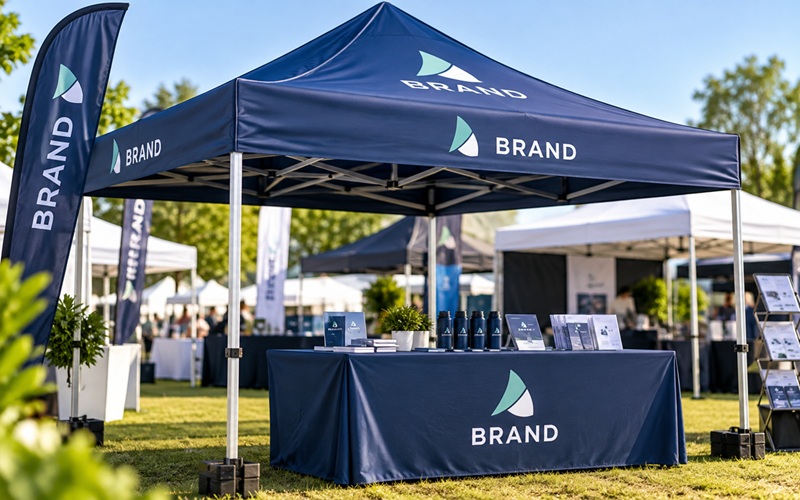
Some companies attend events almost weekly, visiting two tents in a single weekend. For them, custom tents are an indispensable tool, a set of equipment that is taken to the desired location, assembled there, disassembled, transported back, stored, and reused. This changes the requirements for ‘the right tent.’ One that would work for three events a year becomes a chore on twenty occasions. Time spent setting it up becomes a factor in the morning routine rather than an afterthought. And the brand being put forward in the face of such frequent handling takes on greater importance than ever.
Selecting for multiple events is a slightly different task. Here’s how it breaks down.
How do Event Experts Choose the Right Pop-Up Tent for Back-to-Back Shows
Source AI
1. Setup Speed Is Everything
With a tent going up twice a week, the speed of the process becomes an important consideration. The first place to look, then, is the frame mechanism.
Proper pop-up tents use a scissor mechanism: they unfold halfway, then you pull the frame open corner by corner to finish the setup, with legs extending for height. This takes one or two people and ten minutes, with no tools required. Any additional complexity in the mechanism adds time to the process on every single occasion the tent is used. Some cheaper tents, in particular, require two people to manage throughout the process, or feature complicated elements that slow the folding and unfolding. Time spent on these, multiplied by the number of events in a year, can make a significant difference when choosing a tent.
Well worth testing in person, where possible. Ask the supplier to demonstrate the process of taking the tent out of the bag, setting it up, packing it back in, and repeating the process. A tent that requires more than ten minutes will be a chore on every occasion the business uses it.
2. Frequent Use Demands Quality in Specific Areas
A tent that is used occasionally can get by with lighter materials. One that regularly sees use, however, demands some reinforcements. And these aren’t always obvious.
Aluminum rather than steel in the frame, to reduce weight every time the tent is lifted over a weekend. Reinforced stitching on the corners and stress points, due to tension when the canopy is tightened. Mechanisms on the corners and legs that can be opened and closed hundreds of times without giving way. And finally, availability of replacement parts, since sliders and feet are consumables at this level of use. A supplier that replaces them individually helps keep the body of the tent in use for as long as possible while the cheaper elements are replaced.
It works out cheaper in the long run to buy a quality frame that lasts four years and see occasional replacement than to buy a cheaper frame every season and replace parts on it. And it looks better doing it, which brings us on to the next consideration.
3. The Print Has to Survive the Tent Being Opened
Here’s a consideration specific to branded tents: the need to be able to print on a material that will be folded. Regularly.
The other significant advantage of such a printing method is that it is resistant to folds. Unlike surface printing, dye sublimation printing produces images that are highly unlikely to crack on the folds and peel off from products like printed market umbrellas. This technology is ideal for custom event tents that are used and transported multiple times, as it maintains its appearance after repeated folding.
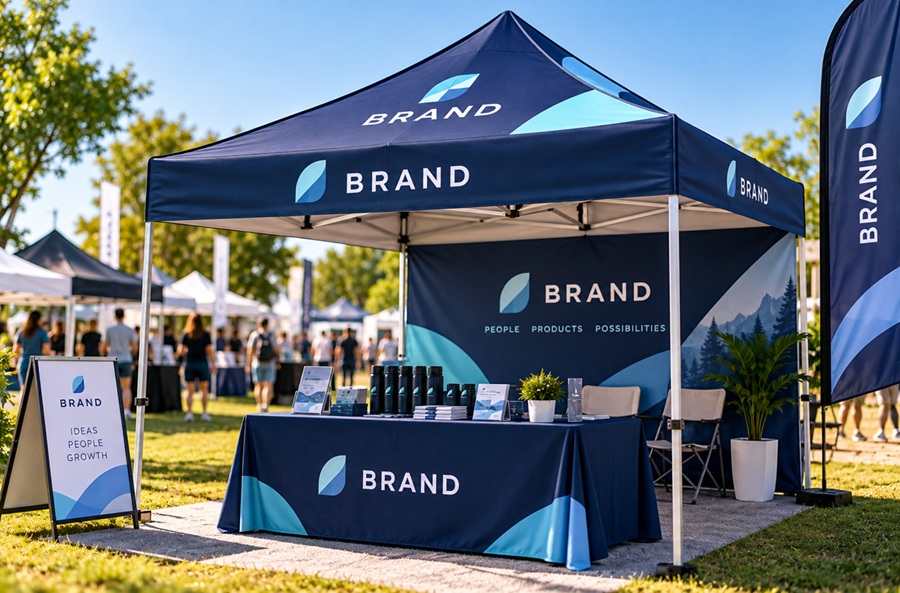
Equally important is the location of the branding on the tent. Logos printed on all four sides of the valance ensure it is visible from any approach, and in a busy environment where the tent may be one of many, this is an important factor in standing out. It is also a useful aid to any repeat customers or those who saw the tent online, helping them spot the business without needing to be right on top of it.
End Point
For a busy calendar of events, the tent is less of a statement piece and more of a tool. As such, the selection criteria should reflect that. A frame that is quick to put up and down without complaint, materials that hold up to hundreds of cycles of the former, printing that survives the handling and looks good while doing so, and accessories that take this all into account and streamline the process. Get these right, and the brand can put itself forward confidently at every event it attends; get them wrong, and the tent will dictate to the business which events are worth the effort.