Why Your Fingerprint Time Attendance Are Becoming the Most Reliable Key in the Building
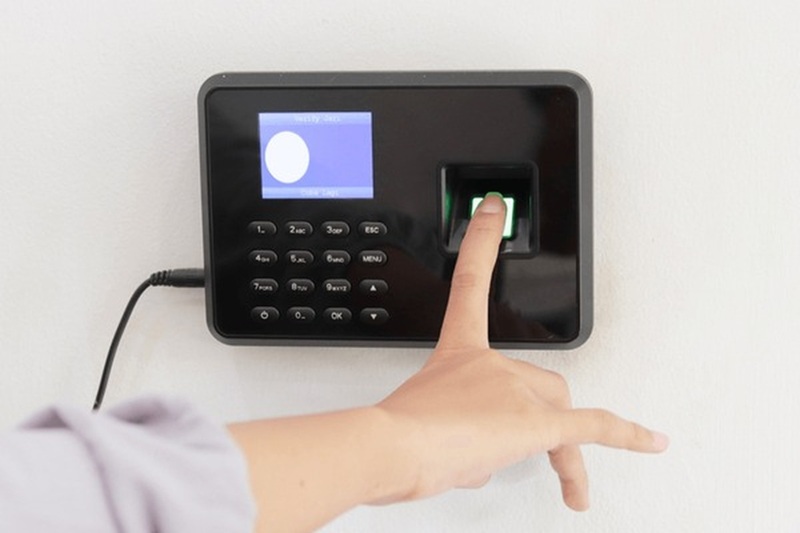
Think about how many times a day you reach for something to get through a door: a key ring, a plastic card, a phone with a code. Each one can be lost, lent, copied, or forgotten on the kitchen counter. Businesses and homeowners are slowly noticing that the one thing nobody can leave behind is already attached to their hand. That simple idea is driving a quiet shift in how we protect doors, server rooms, offices, and workshops.
The Trouble with Things You Carry
Traditional entry methods share a weakness: they prove you have something, not that you are someone. A key works for whoever holds it. A card opens the door for a colleague you handed it to as a favor. A PIN gets shoulder-surfed, written on a sticky note, or shared with the cleaning crew and never changed.
For a small shop, the cost shows up as rekeying locks after an employee leaves. For larger organizations, it shows up as audit headaches. When a door opens, the log says “Card 4471 entered,” but nobody can say for certain who was holding it.
How Fingerprint Time Attendance Readers Actually Work
Despite the movie-style mystique, the process is straightforward. When someone enrolls, a sensor captures the pattern of ridges and valleys on their fingertip. The system does not store a photograph of that print. Instead, it picks out distinctive points, such as where ridges end or split, and converts them into a mathematical template.
On every later visit, the reader captures a fresh scan, builds a new template, and compares it with the stored one. If the two are close enough, the lock releases. The whole exchange takes about a second.
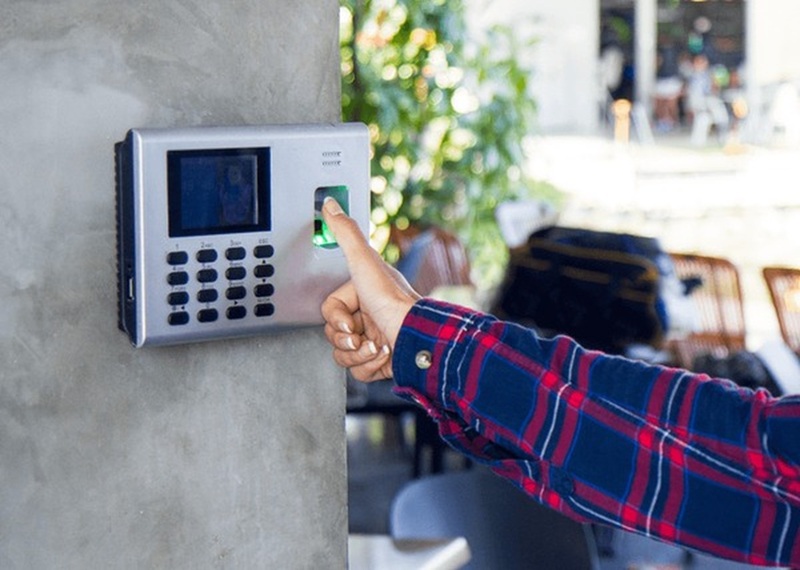
Sensors come in a few varieties. Optical readers photograph the finger using light. Capacitive readers measure tiny electrical differences between ridges and the gaps between them, which makes them harder to fool with a flat image. Ultrasonic models map the finger in three dimensions and can even work through light dirt or moisture.
What You Gain
Accountability. Because the credential is the person, entry records become meaningful. You know who arrived, and when, without guessing.
Convenience. Nobody fumbles through a bag or pockets. Hands full of boxes? A thumb is often enough. New hires are enrolled in minutes, and departing staff are removed with a single click, so there is nothing to collect and nothing to rekey.
Cost control over time. Lost cards and replacement keys add up quietly. With biometrics, there is no hardware to reissue, which matters for businesses with high turnover or many shift workers.
Layered protection. Sensitive areas can combine a fingerprint time attendance. Requiring two proofs makes it far harder for a single stolen item or a single guessed number to open the door.
The Honest Concerns
No security method is flawless, and it helps to look at the objections directly.
Privacy. Biometric data is personal, and people are right to ask where it lives. Good systems store encrypted templates rather than raw images, keep them on the device or a protected server, and follow data protection rules. Before enrolling employees, explain what is collected, why, and how long it is kept. In many regions, written consent is required.
Accuracy. Readers can make two kinds of errors. A false rejection locks out a legitimate user, often because of a cut, dry skin, or a sweaty finger. A false acceptance lets the wrong person in, which is rarer but more serious. Quality devices let administrators tune the balance, and enrolling more than one finger per person solves most everyday rejections.
Spoofing. Yes, researchers have fooled sensors with molds and printed copies. That is why live-finger detection matters. Better readers check for pulse, skin conductivity, or sub-surface features to confirm they are touching living tissue, not a replica.
Permanence. If a password leaks, you change it. You cannot change your fingerprint time attendance. This is the strongest argument for storing templates securely and never treating a fingerprint time attendance as the only safeguard on high-value areas.
Choosing a System That Fits
Start with the environment. A dusty workshop, a cold warehouse, and a polished office lobby each need different hardware. Look for sensors rated for the conditions, and check whether the unit is built for outdoor or high-traffic use.
Next, consider capacity and speed. A reader that holds a few hundred templates suits a small team, while a campus needs thousands and fast matching. Ask about network features, too: central management, remote enrollment, and detailed reports save real time once the system grows.
Finally, plan for failure. Power cuts happen, so confirm there is battery backup and a mechanical or code override. Test the fallback before you need it.
A Practical Rollout
Begin small. Install readers on the doors that matter most: the stock room, the server closet, the administrative office. Enroll a pilot group, collect feedback for a few weeks, and adjust sensitivity settings. Train people to place their finger flat and consistently, since poor technique causes most early complaints. Once the team is comfortable, expand to other entrances.
The Takeaway
Security works best when it is hard for the wrong person and easy for the right one. fingerprint time attendance access control moves the proof of identity from something that can be borrowed to something that cannot, while trimming the clutter of keys and cards. It does not replace sound habits, such as reviewing logs, updating firmware, and limiting who can enter sensitive zones. Used thoughtfully, though, it turns every authorized hand into a key that cannot be misplaced, and gives you a clearer picture of who is moving through your space.