How AI Is Transforming Gaming Software Development in 2026
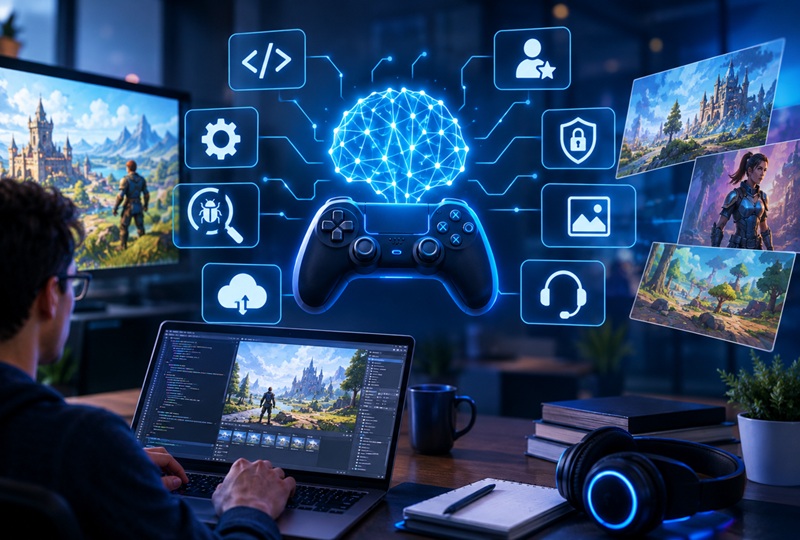
The gaming industry is evolving rapidly as technology continues to change how games are designed, developed, launched, and maintained. From intelligent automation to advanced analytics and cloud-based platforms, modern gaming software development now depends on a combination of technologies that can improve both development efficiency and user experiences.
Among these technologies, Artificial Intelligence (AI) has become one of the most influential. Developers are using AI throughout different stages of the development process, including game design, testing, personalization, customer support, security, and content creation.
In 2026, AI is no longer simply an experimental technology for gaming companies. It has become a practical development tool that can help development teams reduce repetitive work, analyze large volumes of data, and create more dynamic digital experiences.
The Growing Role of AI in Gaming Software
Traditional game development often requires large teams to handle programming, testing, graphics, design, analytics, and maintenance. While these roles remain important, AI-powered tools can support developers by automating repetitive processes and providing useful insights.
AI can analyze large datasets much faster than manual processes. For gaming platforms, this can include information about player behavior, application performance, system errors, engagement patterns, and technical issues.
Companies working in gaming technology, such as Tecpinion, are part of a broader technology ecosystem focused on developing software and platform solutions for the rapidly changing digital gaming industry. As this sector becomes increasingly technology-driven, the ability to combine scalable software architecture with emerging technologies such as AI is becoming more important.
AI can also assist with code generation, debugging, automated testing, content creation, and optimization. This allows developers to spend more time working on complex problems and creative aspects of software development.
AI-Powered Game Development Tools
One of the most visible applications of AI is in the actual development process. Modern development teams can use AI-assisted programming tools to generate code suggestions, identify potential bugs, explain complex code, and automate repetitive programming tasks.
For example, developers working on a gaming platform may need to create similar components across different sections of an application. AI-powered development tools can help generate initial code structures, allowing developers to review and customize them rather than creating everything from scratch.
AI can also assist with debugging. When an application encounters an error, intelligent tools can analyze error messages, identify possible causes, and suggest solutions.
This does not eliminate the need for professional developers. Instead, it gives development teams another resource that can accelerate routine technical tasks and improve overall productivity.
Automated Software Testing
Testing is one of the most important stages of gaming software development. A platform must work correctly across different devices, operating systems, browsers, and network conditions.
Manual testing can be time-consuming, especially when developers need to repeat the same tests after every software update.
AI can make this process more efficient through automated testing. Intelligent systems can identify unusual application behavior, detect potential bugs, and prioritize areas that require additional testing.
AI-based testing can also learn from previous testing results. Over time, this can help development teams identify recurring problems and focus their resources on areas with higher risks.
For technology providers and development companies such as Tecpinion, efficient testing and quality assurance are important considerations when building scalable software solutions for modern gaming environments.
Personalized Gaming Experiences
Another major application of AI is personalization.
Different players have different preferences. Some users may spend more time exploring particular features, while others may prefer specific types of games, interfaces, or content.
AI systems can analyze user interactions and identify patterns in behavior. Developers can then use these insights to create more personalized experiences.
For example, a gaming platform could use AI to determine which types of content a user is most interested in and improve how relevant information is presented within the application.
Personalization can also extend to interface design. AI-powered systems can help platforms understand how users interact with menus, navigation systems, and different features.
The objective is not simply to collect data but to use that data responsibly to create smoother and more relevant experiences.
AI and Game Content Creation
Creating digital content can require considerable time and resources. Developers, designers, and creative teams may need to produce characters, environments, dialogue, visual assets, animations, and other components.
Generative AI is increasingly being explored as a supporting technology for content creation.
AI tools can help developers generate initial concepts, create prototypes, develop dialogue ideas, and experiment with different creative approaches. These outputs can then be reviewed and refined by human designers.
This human-AI collaboration can accelerate the early stages of development while keeping creative control with the development team.
For smaller studios, this can be particularly useful because they may have limited resources compared with large development companies.
AI for Player Support
Customer and player support is another area where AI can provide significant benefits.
Gaming platforms can receive large numbers of support requests involving account access, technical problems, application features, and general questions.
AI-powered support assistants can respond to common questions instantly and help users find relevant information.
For example, an AI assistant could guide a user through basic troubleshooting steps or explain how a particular platform feature works.
More complex issues can still be transferred to human support representatives. This creates a hybrid support model where AI handles routine questions while human teams focus on cases requiring judgment and personal assistance.
Improving Gaming Platform Security
Security is a critical part of modern software development. Gaming platforms need to protect user accounts, application data, and digital infrastructure from unauthorized activity.
AI can assist security teams by analyzing system activity and identifying unusual patterns.
For example, an AI-based monitoring system may detect activity that differs significantly from normal user behavior. Security teams can then investigate these signals and determine whether additional action is required.
AI can also help developers identify potential vulnerabilities during software testing and development.
However, AI should be considered one component of a broader security strategy. Strong authentication, encryption, access controls, regular security testing, and responsible data management remain essential.
Cloud Technology and AI
The combination of cloud computing and AI is also changing gaming software development.
Cloud platforms provide developers with scalable infrastructure that can support applications as demand changes. AI services can then be integrated into these environments to provide analytics, automation, monitoring, and personalization.
Cloud-based development also makes collaboration easier for distributed development teams. Developers can work with shared environments, testing systems, databases, and development tools without relying entirely on local infrastructure.
As gaming platforms become more complex, the combination of cloud technology and AI can help development teams build systems that are more flexible and scalable.
For companies operating in the gaming technology space, this combination can also support the development of modular platforms that can adapt to new technologies and changing market requirements.
The Importance of Responsible AI
Although AI provides many opportunities, responsible implementation is essential.
Gaming companies and software developers need to consider data privacy, security, transparency, and user consent when implementing AI systems.
AI-generated content should also be reviewed to ensure that it meets quality and ethical standards. Automated systems can make mistakes, and human oversight remains important.
Developers should understand how AI systems process information and ensure that sensitive user data is handled appropriately.
Responsible AI development is therefore not simply about adopting the newest technology. It is about implementing AI in ways that provide genuine value while protecting users and maintaining software quality.
What the Future Holds for AI in Gaming Development
AI is likely to become even more deeply integrated into gaming software development over the coming years.
Development teams may increasingly use AI for automated quality assurance, intelligent analytics, personalized interfaces, predictive maintenance, content generation, and development assistance.
At the same time, human creativity and technical expertise will remain essential. AI can automate many repetitive tasks, but developers are still responsible for defining objectives, evaluating results, solving complex problems, and making important technical decisions.
The most effective approach will likely be collaboration between humans and intelligent software rather than complete replacement of development teams.
Conclusion
AI is transforming gaming software development by helping teams automate repetitive processes, improve testing, understand user behavior, create digital content, strengthen security, and deliver more personalized experiences.
Technology companies such as Tecpinion illustrate the growing importance of specialized software and platform development within this rapidly evolving industry. As gaming technology continues to advance, businesses will need solutions that can integrate emerging technologies while maintaining scalability, security, and reliability.
However, successful AI adoption requires more than simply adding artificial intelligence to an existing platform. Developers need to focus on security, privacy, quality, responsible data usage, and human oversight.
As technology continues to evolve, organizations that use AI strategically can build gaming software that is more efficient, scalable, and responsive to changing user expectations. The future of gaming development will likely depend not on AI alone, but on how effectively developers combine artificial intelligence with human creativity and technical expertise.